


Senate Passes Iran War Powers Resolution — Historic Congress Rebuke
- 18 hours ago
- 4 min read
The United States Senate made history on Tuesday, June 23, 2026, voting 50 to 48 to pass a war powers resolution directing President Donald Trump to remove American armed forces from hostilities against Iran. The vote marks the first time in history that both chambers of Congress have successfully passed a resolution under the 1973 War Powers Act telling a sitting president to end a military conflict — a moment that congressional historians are already calling unprecedented in American political life.
The House of Representatives had already passed the same resolution on June 3 by a vote of 215 to 208, and Tuesday's Senate vote completes the legislative process for what is technically a concurrent resolution. Because the measure is a concurrent resolution rather than a bill, it does not require the president's signature and has no force of law under the Supreme Court's 1983 INS v. Chadha ruling. The White House immediately moved to downplay its significance, with a senior official dismissing the vote as having 'no significance' and blaming 'Republican absences' for its narrow passage.
Despite its non-binding nature, the political significance of the vote cannot be overstated. Tuesday's Senate vote is the 10th time the Senate has voted on an Iran war powers measure since the beginning of the year, and the first time it passed. Four Senate Republicans broke ranks to support the resolution: Susan Collins of Maine, Bill Cassidy of Louisiana, Lisa Murkowski of Alaska, and Rand Paul of Kentucky. One Democrat — Sen. John Fetterman of Pennsylvania — voted against. The final tally was possible because two Republicans were absent.
Senator Collins, who has been one of the most consistent Republican critics of the administration's Iran posture, said the vote sends a clear message that Congress is exercising its constitutional authority. 'The decision to go to war belongs to Congress, not any single president,' Collins said in a statement following the vote. Senator Rand Paul, whose libertarian foreign policy stance has frequently put him at odds with his party's hawkish wing, called the resolution a 'necessary assertion of constitutional authority' and said he hoped it would push both sides toward a diplomatic resolution.
The vote comes at a particularly turbulent moment in the US-Iran conflict. Iran has reportedly agreed in principle to allow nuclear inspections as part of a broader 14-point memorandum of understanding brokered by the Trump administration, but Tehran has publicly denied agreeing to any inspection framework. Trump told reporters this week that Iran had 'completely agreed' to allow nuclear site inspections — a claim Iran's foreign ministry flatly rejected. The gap between Washington and Tehran's public statements has fueled bipartisan frustration on Capitol Hill and contributed directly to the pushback that produced this week's Senate vote.
On the Senate floor ahead of the vote, Senate Majority Leader John Thune warned that the resolution was premature and would undermine the administration's negotiating position. Armed Services Committee Chairman Roger Wicker echoed those concerns, saying that any show of congressional division at this stage of the Iran negotiations could give Tehran leverage it would exploit at the bargaining table. Critics of the resolution also pointed to the ongoing situation in Lebanon, where Israeli forces remain engaged despite international pressure to withdraw, as evidence that a premature American drawdown would destabilize the region further.
Senate Minority Leader Chuck Schumer hailed the vote as a historic rebuke of executive overreach. 'No president should have the unilateral authority to keep this country in an active military conflict without congressional approval,' Schumer said. 'Today, for the first time in 53 years since the War Powers Act was passed, Congress has spoken with a bipartisan voice to assert that authority.' Democrats have repeatedly invoked the Iran conflict's toll on American military personnel — with over 400 US service members killed or wounded in operations against Iranian forces and their proxies since the conflict began — as justification for the resolution.
The Trump administration's response to the resolution was swift and dismissive. A White House spokesman confirmed that the administration does not view the concurrent resolution as legally binding and that the president has no intention of withdrawing American forces from the region. 'The president is using every tool available to achieve a diplomatic resolution with Iran while maintaining maximum pressure,' the spokesman said. 'This vote changes nothing about our strategy.' The administration has consistently argued that its military posture in the region is necessary to prevent Iran from developing nuclear weapons.
For political observers, Tuesday's vote is a warning sign about the state of Republican unity on foreign policy. The Trump administration has staked significant political capital on its Iran strategy, and the defection of four Senate Republicans — even on a largely symbolic measure — signals that the coalition is not as solid as the White House has publicly projected. With midterm elections still over a year away, the internal GOP tension over Iran is one of the most closely watched dynamics in Washington, and today's vote has given opposition voices within the party a platform they did not have yesterday.
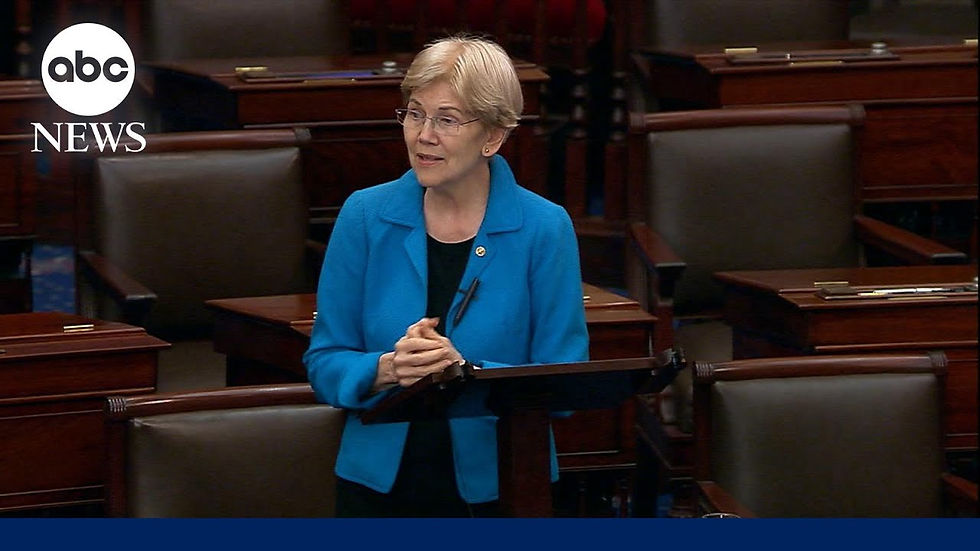
The Iran conflict remains one of the most consequential foreign policy challenges of the Trump second term. As negotiations continue and military operations persist, both Congress and the public are increasingly demanding answers about the endgame. The passage of Tuesday's war powers resolution may be symbolic in legal terms, but as a political signal, it is one of the loudest official statements Congress has made about the limits of presidential authority in modern memory. Watch the news coverage of the Senate vote below.




Comments